 Joel Libava
I know a lot about franchisee failures. It’s terrible when they happen.
In my 25 years in franchising, I’ve watched good people lose their savings. Even their retirement funds. And I’ve heard of marriages dissolving. It happens. But I don’t say that lightly.
In this post, I’m going to share the top 10 reasons reasons why franchisee failures happen, and how to reduce* them.
*Obviously, franchising isn’t perfect. No business model is.
And while it would be great if no franchisees would ever go out of business, nobody yields that type of power. Let’s continue.
Key Takeaways About Franchisee Failures
Most franchisee failures are predictable. They’re also mostly preventable. The problem is that nobody involved in any part of the sales process has a financial incentive to tell you that.
I’m specifically talking about franchise consultants (brokers), outside franchise sales organizations, and/or franchise company sales representatives.
Granted, the FDD gives you most of the numbers. But it doesn’t give you the full picture.
Fact: Undercapitalization kills more franchises than bad owners ever will. So budget for 18 months of working capital. Not 90 days. Not 6 months. Eighteen.
The franchisee validation list aspiring franchisees are sometimes given is not a random sample. It’s a winners list. Don’t take it too seriously. Use it for practice instead.
Instead, you need to call 12-15 franchisees on your own (from the FDD). Ask the hard questions. And find the ones who left the system and ask them why.
Keep reading to find out what the other things are that cause franchise owners to fail and lose their hard-earned money.
A Word From a Former Franchise Consultant
I’ve personally seen franchisees fail. As in, go out of business and lose their money.
That said, this next part is important.
One of the reasons I left the franchise “consultant” space is because some of the folks I helped get into a franchise ended up going out of business. It hurt. Them, mostly.
I mean, there I was. I had successfully placed a person I had worked with into a franchise business.
This person was excited to become their own boss. To leave corporate. To leave all the bullshit that goes on in corporate America behind.
Undoubtedly, they felt the franchise opportunity I presented to them (in a face-to-face-meeting at an office I leased at the time) was a good fit for them. I did too.
Until they called to tell me they were closing their business.
Or, that they needed to sell their franchise business and called to ask me if “I did that type of thing.” I didn’t. And I don’t. I hated those calls.
It meant that people were losing money and losing hope.
And I felt that it was partly my fault.
One more thing: I’m glad I warned my clients (during the past couple of years) about the franchisor named here.
In that case, the clues for me included the oversized egos of the executives and the fact that they were selling franchises too fast.
$12,000 to $15,000 Paydays
At the time, (when I was a franchise consultant) I was getting paid $12,000-$15,000 for each successful placement of a candidate into a franchise I represented. That was good money. Like most of you, I like making money.
But something didn’t feel right.
That’s because I started feeling guilty about getting paid thousands of dollars to help someone get into business…only to see them go out of business. Sometimes a year in.
Now, there were a few other things were going on in my life too. But there’s no need to get into them today.
Franchisee Failure Causes and How Aspiring Franchise Owners Can Avoid Going Out of Business
What are the top 10 things that cause franchise owners to fail?
In my experience, these are the main reasons:
1. Chronic under-capitalization
Many owners burn through their cash faster than expected. They might have enough for the franchise fee, but they underestimate “working capital“—the money needed to cover payroll, rent, and supplies before the business actually turns a profit. If you don’t have a 12-month runway, a couple lousy quarters can sink the ship. So, start with enough money in reserve.
2. The “Lone Wolf” mentality can cause franchisee failure
Franchising is essentially paying for a rulebook. Some entrepreneurs struggle because they want to innovate where they shouldn’t—like changing the menu, altering the logo, or ignoring the corporate marketing plan. When a franchisee stops following the proven system, they lose the very advantage they paid for.
Read what I wrote for the U.S. Small Business Administration about all the rules franchisees need to follow.
Tip: Take my Free Franchise Compatibility Quiz before you get too serious about buying a franchise. I grade each one personally. Let’s see if you’re truly “franchise material.”
3. Poor location selection causes franchisee failures
In retail and food, location is everything. A franchisee might choose a spot because the rent is cheap, ignoring the fact that foot traffic is non-existent or the “wrong” demographic for the brand. If the corporate office offers site selection assistance and the franchisee ignores it (or the franchisor’s data is flawed), the business is dead on arrival. When it comes to choosing a location, be smart, not cheap. I don’t want to see your franchise fail.
4. Semi-absentee ownership issues
As of late, lots of franchise opportunities are being presented as “semi-absentee” models. But are they? In reality, new locations require intense, hands-on management. Owners who try to run a new franchise while keeping their 9-to-5 often find that staff morale drops, customer service slips, and “theft” (both time and inventory) spikes when the boss isn’t around. My advice? Talk to lots of franchisees to see if the business truly is semi-absentee from the start.
5. The “brand reliance” trap
Many franchisees fall into the trap of thinking the logo on the building will do 100% of the heavy lifting. They assume that because they bought into a famous brand, customers will automatically pour through the door.
The Reality: National advertising and marketing builds awareness, but local store marketing builds a business. And if a franchisee doesn’t get involved in their local chamber of commerce, sponsor the neighborhood little league, or run local social media ads, they’ll get beat by a hungrier independent competitor down the street. And don’t forget local advertising both online and offline. Don’t be cheap. Don’t be afraid to spend the needed money on local advertising.
6. Poor due diligence has a huge affect on the franchise failure rate
99% of aspiring franchisees have never researched a franchise.
Check Out My New Guide for Franchise Buyers!

That means they need to learn how to do it. Let me rephrase that.
They need to learn how to do franchise due diligence correctly.
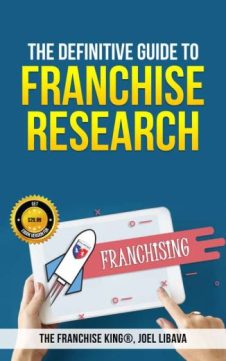
One way to learn how to do proper franchise research is to grab this:
Another way?
Use your favorite search engine.
Because there’s lots of good information around on franchise due diligence.
That said, if I were to name the most important thing anyone looking seriously at buying a franchise needs to do right it’s this:
Contacting existing and past franchisees of the franchise they’re interested in buying.
But, there’s an art to it.
You just can’t ask about how much a franchisee you’re calling earns right out of the gate. Why not?
Because the person on the other end of the phone doesn’t know you.
Not well enough to give his or her financial information to you over the phone.
You need to go slow. You need to get to know each other.
Which I teach you how to do in my Franchise Research Guide (ahem).
The bottom line?
If you don’t know what questions to ask-and how to ask them, you’re going to miss things. Things you need to know before you plunk down $200,000 to be your own boss. Things that cause franchisee failure.
7. Franchisee failure because of a lousy franchisor
Sometimes, you don’t find out you’ve chosen a lousy franchisor until you bought the franchise.
But wait, Joel. I heard good things from the franchisees. Okay. In that case, my question to you would be “How many franchisees did you talk to?”
Heck, if you only talked to the 3 franchisees the franchise salesperson gave you contact information for, it’s on you.
You need to talk to way more franchisees-and not only the ones on the list the franchisor gave you.
Specifically, you need to choose franchisees to talk with (via phone and via in-person visits) that are named on the FDD. At least a dozen. More than 12 would be better.
Because it would suck to find out that the franchisor you signed on with provides practically no support, specializes in broken promises, has poor communications with its franchisees, and is only focused on selling more units.
In essence, all the things that contribute to franchise failures.
8. You picked the wrong franchise for you
This happens a lot.
You visit a pizza place while you’re on vacation, and it impresses you so much, you just have to open one in your neighborhood.
The problem being, unless you have the management skills needed to own and operate a food-service franchise business…in this case, real-life experience, you may be setting yourself up for failure. This next one could catch you off guard.
9. “They” picked the wrong franchise for you
Another reason a franchisee can fail has to do with newer or unethical franchise consultants. Especially now, since the average commission consultants/brokers receive from placing people into franchises they represent is hovering around $30,000.
Because of that, it’s entirely possible that the franchise opportunities they present to you aren’t a perfect fit. Or, at least as close to perfect as possible.
If that happens to you, there’s a good chance you’ll struggle to be successful as a franchisee-and you may have to close your doors if you run out of money.
Now, does that mean that franchise consultants are snakes who only want to collect their generous commission checks and move on to their next victim?
No. Not at all.
But, every industry has people who aren’t focused on doing the right thing for the people they work with. My advice?
If you’re going to work with a franchise consultant/broker, get some background information on them (use Google etc.) And talk to people who have worked with them.
Note: I know several franchise consultants…and I trust them to do the right thing for their candidates.
10. Franchise ownership failure because of totally unrealistic expectations
I’m going to tell you something that a lot of people won’t.
You can’t leave a $200,000 a year corporate position and expect to replace your income in a year or two by buying a franchise.
That’s because it takes time and effort to build a business up from zero.
Realistically, you shouldn’t expect to make ANY money for at least a year. Maybe longer.
Read that again.
Continue Learning About Franchising
Check out these important franchise trendsGet the latest franchise research tips
Learn how to choose the right franchise for you
Educate yourself about some of the franchise legal stuff
Get specific advice on owning and operating a franchise

Think about the premise of that for a minute.
Don’t you think more people would be buying franchises if they could almost instantly replace their incomes?
The fact is, most of the people who look at buying a franchise don’t buy a franchise.
Not because franchising is bad.
But because buying a franchise can be risky. You can fail as a franchisee.
Especially if you didn’t read this post before you purchased one.
Wait! I have one more reason why franchisees fail.
Some franchisees fail because they didn’t hire a franchise lawyer
Believe it or not, some of the people who buy franchises don’t hire a franchise lawyer.
What????
I know, right?
Please…make sure you hire a franchise attorney to look over the Franchise Disclosure Document and your Franchise Agreement before you send your money it.
Finally, I wrote this post because I don’t want you to fail as a franchisee.
I hope you follow my suggestions.
Because franchising done right, with the right organization behind you, can be life-changing. In a good way.
Here’s to your success.
Frequently Asked Questions About Franchise Owner Failure
Undercapitalization. Most new franchise owners don’t budget enough working capital to survive the early months before their business turns a profit. You need at least 12 months of reserves — not 90 days, not 6 months. Running out of cash before your business finds its footing is the fastest path to closing your doors.
Realistically, you shouldn’t expect to make any meaningful income for at least a year — possibly longer. If you’re leaving a $200,000 corporate salary expecting to replace it quickly through a franchise, you’re setting yourself up for serious disappointment. Building a business from zero takes time, and ignoring that reality is one of the most common — and costly — mistakes new franchisees make.
At least 12 — 15 would be better. And don’t only use the list the franchisor hands you. That’s a curated winners list, not a random sample. Pull names directly from the FDD, contact them yourself, and make a real effort to track down franchisees who have already left the system. Those conversations are often the most revealing.
Not automatically. Franchise consultants earn commissions averaging around $30,000 per placement today, which creates an obvious conflict of interest. Some consultants are ethical and do right by their candidates — but not all. Research anyone you work with, ask for references, and remember that the consultant gets paid when you buy, not when you succeed.
About the Author
Joel Libava is The Franchise King® — an independent franchise advisor with 25+ years in the industry, two published books on franchising, and his writing has been featured in The New York Times, Forbes, CNBC, Entrepreneur® Magazine and others. In addition, he wrote exclusively for the U.S. Small Business Administration blog for eight years. He doesn't sell franchises. Instead, Joel helps you figure out if franchise ownership is actually right for you — and if it is, teaches you his powerful, proven-to-work franchise research techniques, so you can make a smart, informed decision on a franchise to own and be your own boss.
Note: When you buy through links on this website, we may earn an affiliate commission.