 Joel Libava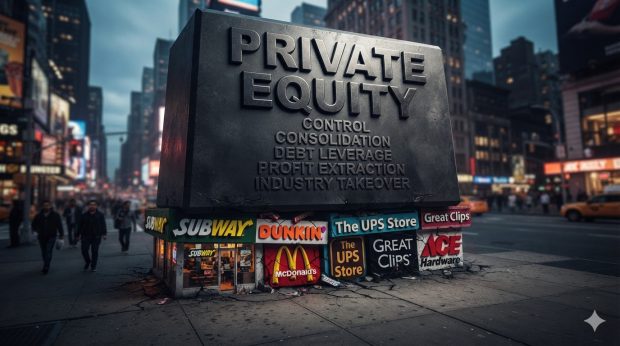
I’ve been in the franchise business for over 25 years. I’ve seen brands grow the right way. I’ve seen brands grow the wrong way. I’ve seen franchisees win big and lose everything. But now, with the introduction of private equity in franchising, I’m starting to think about the potential for franchisees to get screwed.
That being said, I’m not here to scare you.
I’m here to explain something I think every serious franchise buyer needs to understand before they sign anything.
Note: Certain people aren’t going to like this post. People like:
- Franchise CEO’s and founders who are in the middle of negotiations with private equity firms
- Franchisors who have already received big checks from private equity firms
- Franchise executives who got to share in that cash
- Aspiring franchisees who are already nervous about buying a franchise
- Haters of franchising truths
That said, this needed to be written, as the increase of franchisors getting private equity money is being discussed, albeit quietly.
Read what franchise industry leaders say about private equity in the franchise industry.
Key Takeaways
Private equity in franchising is growing fast, and most franchise buyers don’t know how it works.
Some private equity firms use borrowed money to buy franchisors. That debt becomes the franchisor’s problem, not the firm’s. This can lead to higher fees, weaker support, and pressure to grow too fast.
In addition-and this is important for you to know, private equity firms often plan their exit within about six years. That’s a short window. It doesn’t match the long-term relationship healthy franchising requires. Especially with franchise agreements that have a 10-year term.
Additionally, the Toys “R” Us story shows what can happen when debt outweighs investment. The company failed. The firm still profited.
That’s why today’s franchise buyers need to know who really owns the brand before they sign. A few smart questions during due diligence can protect you from costly surprises down the road.
Continue reading to uncover what most people overlook—trust me, it’s worth it.
Private Equity in Franchising Isn’t New. But You Should Still Pay Attention if You’re Looking to Buy a Franchise
Private equity firms have owned pieces of franchising for a long time. Some big, familiar brands have PE money somewhere in their history.
That’s not automatically bad news. Money can help a brand grow. It can pay for better technology, better training, more support. I’ve seen it work.
The problem is what happens too often once PE takes the wheel.
Journalist Megan Greenwell dug into this for her book, Bad Company: Private Equity and the Death of the American Dream.
She recently spoke at Harvard about what she found, and one thing stood out to me.
Fact: Private equity firms don’t think in decades. They think in years. The typical holding period for a company owned by private equity runs around six years before the firm cashes out.
Six years. That’s the whole plan.
Now compare that to what a healthy franchise system actually needs: a franchisor that’s in it for the long haul, invested in whether individual franchisees succeed over time. Those two timelines don’t match up. And when they don’t match up, someone usually pays the price.
Franchising And Private Equity: Here’s the Trick Most People Don’t Know About
I want to explain something called a leveraged buyout, because once you understand it, a lot of this starts making sense.
When a private equity firm buys a company, it usually borrows most of the money to do it. But here’s the catch: that debt doesn’t become the PE firm’s problem. It becomes the company’s problem.
Read that again.
Check Out My New Guide for Franchise Buyers!
The firm buys the company with borrowed money, then hands the bill to the company it just bought.
That’s not a small detail buried in the fine print. That’s basically the whole business model.
And it gets better for them, worse for everyone else.
That’s because private equity firms also collect guaranteed fees just for managing the money, whether the company does well or not. Studies have found that roughly two-thirds of what these firms earn comes from those fees, not from actually growing the business.
So think about that for a second. The firm can get paid even if the franchisor they bought struggles. Even if it eventually shuts down.
Who actually carries the risk, then? Not the private equity firm. The company. And in franchising, that trickles straight down to franchisees, their employees, and their customers.
Why Should The Toys “R” Us Story Matter to Every Franchise Buyer
You don’t have to take my word for how this plays out. There’s a real-world example, and it’s one most people already know, even if they don’t know the backstory.
Back in 2005, three firms bought Toys “R” Us for $6.6 billion. More than $5 billion of that price tag was debt, and guess who got stuck paying it back? Toys “R” Us itself.
The company wasn’t dying at the time. Sure, Walmart and Amazon were putting on the pressure. But Toys “R” Us still had options. It could have fought back.
Instead, all that debt ate up the cash the company needed to actually compete. The interest payments alone were so heavy that there wasn’t money left to build a real online presence or reinvent the stores to compete with Amazon and Walmart.
You know how the story ends.
In 2018, all 735 remaining stores closed. About 33,000 people lost their jobs. That came after a bankruptcy filing the year before.
And here’s the part that really gets me frosted.
Fact: The workers who lost their jobs got no severance.
Meanwhile, executives collected big bonuses right before the closures were announced. And the private equity firms involved actually walked away having made more money on the deal than they originally put in.
Let that sink in. The company died. The people who ran it into the ground got paid anyway.
That’s not a sad business failure. That’s the business model working exactly the way it was built to work, just not for the people who worked there.
Okay, But What Does This Have to Do With Franchising?
Fair question. Toys “R” Us wasn’t a franchise. So let me connect the dots for you, because when it comes to franchising and private equity, this matters more than you might think.
Franchisors get bought by private equity too. When that happens, the same debt trick can happen at the brand level. That debt has to get paid somehow. Sometimes it shows up as eventual higher royalties. Sometimes it’s new fees nobody saw coming. Sometimes it’s the franchisor quietly cutting the support you were counting on, like your field consultant, your marketing help, your training resources.
The “we care about our franchisees” mindset can fade fast. Here’s something that stuck with me from Greenwell’s research. Private equity firms tend to answer only to their investors. So anything a company does that isn’t purely about profit, things like taking care of employees, supporting communities, or genuinely helping franchisees succeed, tends to disappear once PE takes over.
Remember, a good franchise system runs on trust. It runs on a franchisor that actually wants you to succeed, not just a franchisor counting down to its next sale, like what can happen with private equity in franchising.
It’s not just franchisors. Big multi-unit franchisee groups are getting bought up too. Same story, different owner. Debt gets loaded onto the company. Costs get cut. And the people working the counter or managing the store usually feel it long before anyone at headquarters does.
The exit is the whole point. One more thing from that research really stood out to me. This short-term, profit-first thinking has spread way beyond firms that officially call themselves private equity. As one observer put it, this mindset has become the norm, even at companies that aren’t technically PE-owned.
Continue Learning About Franchising
Check out these important franchise trendsGet the latest franchise research tips
Learn how to choose the right franchise for you
Educate yourself about some of the franchise legal stuff
Get specific advice on owning and operating a franchise

So What Should You Actually Do About Franchising and Private Equity?
I’ve always said buying a franchise means buying into a relationship, not just a business. Private equity ownership in franchising can change that relationship in ways you won’t see on the surface. Here’s how to protect yourself.
Find out who really owns the franchisor. Not just the name on the sign out front. Dig into the parent company. A quick Google search usually tells you if private equity is involved, and if so, who, and when they bought in.
Ask if and when the current owners plan to sell. You might not get a straight answer. Ask anyway. And if the brand has already flipped hands once or twice under PE ownership, that tells you something important.
Read the financials in the FDD, and pay attention to debt. Item 21 of the Franchise Disclosure Document has the audited financial statements. Look at how much debt is sitting on the franchisor’s books. Heavy debt up top has a way of turning into pressure down below, through fee hikes, thinner support, or pushy new-unit growth targets.
Watch for cost-cutting dressed up as “efficiency.” Fewer field reps. Support calls getting outsourced. Marketing dollars quietly shifting away from your local store and toward corporate initiatives. These are often early warning signs.
Talk to current franchisees, and ask directly about ownership changes. If the brand changed hands recently, ask what changed afterward. Support. Fees. Communication from the top. Franchisees who’ve lived through it will usually tell you the truth if you just ask.
The Bottom Line
Private equity in franchising isn’t automatically the villain here. Some PE-backed brands are run well, funded properly, and genuinely committed to their franchisees.
But the math built into most private equity deals runs against what makes franchising work in the first place: a franchisor that’s actually invested in your long-term success, not just chasing a quick, profitable exit.
Toys “R” Us didn’t fail because people stopped wanting to buy toys. It failed because the people who owned it were never really in the toy business. They were in the debt-and-exit business. The toy stores just happened to be along for the ride.
So before you sign anything, find out who you’re really going into business with. Sometimes it’s not the brand on the sign. It’s the private equity firm standing behind the franchise concept.
(Note: I used Google to help me create the main image.)
About the Author
Joel Libava is The Franchise King® — an independent franchise advisor with 25+ years in the industry, two published books on franchising, and his writing has been featured in The New York Times, Forbes, CNBC, Entrepreneur® Magazine and others. In addition, he wrote exclusively for the U.S. Small Business Administration blog for eight years. He doesn't sell franchises. Instead, Joel helps you figure out if franchise ownership is actually right for you — and if it is, teaches you his powerful, proven-to-work franchise research techniques, so you can make a smart, informed decision on a franchise to own and be your own boss.
Note: When you buy through links on this website, we may earn an affiliate commission.