 Joel Libava
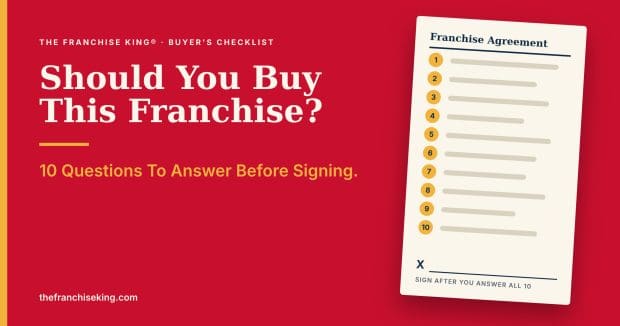
Should you buy this franchise?
Let’s say you’ve found a franchise opportunity that looks promising.
The business model makes sense. The franchise representative has been helpful. You’ve reviewed the Franchise Disclosure Document (FDD), spoken with a few existing franchisees, and maybe even attended Discovery Day.
You’re getting excited.
And that’s understandable. The possibility of owning your own business, being your own boss, and building something for yourself as opposed to someone else can be pretty exciting.
But before you sign a franchise agreement and start writing checks, there’s something you need to do.
You need to make sure the franchise you’re considering is actually the right business for you.
After more than 25 years of working with prospective franchise owners, I’ve seen how easily excitement can get in the way of good decision-making. And it happens way more than you think.
With that in mind, here are some questions you need to answer before committing ($$$$) to a franchise.
1. Can You Afford the Total Investment of the Franchise You Want to Buy?
As you know, the initial franchise fee is only part of the picture.
You need to understand the entire investment, including equipment, build-out, inventory, insurance, professional fees, training expenses, and working capital.
So pay particular attention to Item 7 of the Franchise Disclosure Document. It provides the franchisor’s estimated initial investment range.
But don’t automatically assume the high end of that range will cover everything you need. Always stash more cash than suggested.
You’ll also want to have enough money available to support yourself and your household expenses while the business gets established. Your mortgage company probably won’t accept “I’m building brand awareness” as an explanation for a late payment.
2. Do You Understand How This Franchise Makes Money Before You Buy It?
You need to understand the business model before buying into it.
- Where does the majority of your revenue come from?
- What are the major operating expenses?
- How much does the franchisor collect in royalties and advertising fees?
If the franchisor provides financial performance representations in Item 19 of its FDD, examine them carefully.
But make sure you understand what the numbers represent, which franchise locations are included, and whether the results reflect businesses similar to the one you’re considering opening.
Remember: Revenue isn’t profit. And projected revenue isn’t money in your bank account.
3. Have You Spoken With Enough Existing Franchisees to Buy This Franchise?
This is one of the most important parts of franchise research. Correction.
Calling and visiting existing franchisees is the most important part of your franchise due diligence.
The franchisor will give you its perspective on the business. Existing franchisees can give you another.
Use Item 20 of the FDD to identify current and former franchise owners.
Then use the dozens of franchisee questions this Guide provides for you.
Ask about their experiences with training, ongoing support, marketing, profitability, staffing, and communication with the franchisor.
Tip: Don’t just speak with the franchisees the sales representative recommends. Contact people who aren’t on the suggested list, too.
Finally, be sure to ask the the tough questions. You’re considering making a substantial financial investment. This isn’t the time to be shy.
4. Is this Franchise a Good Fit for Your Skills and Personality?
A franchise can be financially attractive and still be a terrible fit for you.
For example, if you’re considering a restaurant franchise, are you prepared to manage employees, deal with customer complaints, monitor food costs, and work nights and weekends?
If you’re considering a home-based service franchise, are you comfortable with sales, local marketing, and managing a team of technicians?
In any event, be honest about your strengths, weaknesses, and expectations.
Check Out My New Guide for Franchise Buyers!

You don’t need to know everything about running the business before you start. That’s part of what training is for.
But you should have a realistic understanding of what the job of franchise owner actually involves. Then, determine if your skills are a good match for the skills needed to be successful.
5. Is the Territory Big Enough to Support Your Business?
Territory rights, and the size of it, has a significant impact on your franchise’s profit potential.
That means you need to find out exactly what territory you’re purchasing and whether it provides any meaningful protection* from competing franchise locations.
*When it comes to franchise territory protections, the specific wording in your franchise agreement matters. For example, how does your franchisor define “protected?” Go over all territory matters with your franchise attorney.
More questions to ask about your territory include:
- Are there population requirements?
- Are certain customers or accounts excluded?
- Can the franchisor sell products or services directly into your territory?
Because a territory that looks attractive on a map isn’t necessarily a territory that can support a profitable business.
6. Is the Franchisor Providing the Support You Expect?
Franchise sales presentations often highlight training, marketing assistance, technology, and “incredible” ongoing support.
But what does that support actually look like?
Ask existing franchisees whether the franchisor delivers what it promises. Get specific examples on how the franchisor helped.
Next, find out how long initial training lasts, what happens after training ends, and whether field representatives are actually available when problems arise.
Remember, in franchising you aren’t simply buying a brand name and a set of operating procedures.
You’re entering into a long-term business relationship. Make sure you understand what that relationship includes.
7. Are There Any Red Flags in this Franchise Disclosure Document?

Don’t treat the FDD like another document to sign and file away.
It contains important information about the franchisor, its financial condition, litigation history, fees, obligations, and franchisee turnover.
Pay particular attention to:
- Item 3: Litigation history.
- Item 6: Other fees.
- Item 7: Estimated initial investment.
- Item 19: Financial performance representations, if provided.
- Item 20: Outlet openings, closures, transfers, and franchisee information.
- Item 21: Financial statements.
If something doesn’t make sense, get an explanation.
You must have an experienced franchise attorney review the FDD and franchise agreement before signing.
8. What Happens If this Franchise Business Doesn’t Work Out?
Nobody enters franchise ownership expecting to fail.
Still, you need to understand your options if things don’t go as planned.
- Can you sell your franchise?
- What approval does the franchisor need to give?
- Are there transfer fees?
- What happens if you want to close the business?
- Can you get sued, personally?
Review the franchise agreement’s transfer, termination, and renewal provisions.
Also, understand whether you’re personally guaranteeing obligations under the agreement.
Because when it’s all said and done, it’s much better to understand your exit options before entering the relationship.
9. Have You Compared This Franchise With Other Similar Opportunities?
Just because you’ve found a franchise you like doesn’t mean it’s the best opportunity available.
If you’ve narrowed your choices to one specific franchise business, consider whether you’ve researched enough alternatives.
That means pulling up a competitors website and requesting franchise information.
Once you receive it, compare the initial investment, business model, franchisee satisfaction, support, operating requirements, and financial performance information.
Then talk to their sales rep and go through the opportunity. Do the same type of research you’ve been doing on the one you’re currently investigation. Why?
Because you might discover that another franchise offers a better fit, a more manageable investment, or a business model that better matches your goals. Bottom line?
Continue Learning About Franchising
Check out these important franchise trendsGet the latest franchise research tips
Learn how to choose the right franchise for you
Educate yourself about some of the franchise legal stuff
Get specific advice on owning and operating a franchise

Don’t let the excitement of finding one promising opportunity prevent you from doing a little more homework.
10. Are You Making This Decision for the Right Reasons?
This last question might be the most important.
Are you buying this franchise because you’ve thoroughly researched it and believe it makes sense?
Or are you buying this franchise because you’re tired of working for someone else, want to get out of your current job, or have been persuaded that franchising is a shortcut to financial freedom?
Look; while it’s true that franchise ownership can provide a path to being your own boss, it’s not a guaranteed path to wealth.
Heck, there’s no guarantee you’ll even make it.
There will be expenses, employees, customers, competition, and plenty of headaches. Days when things don’t go according to plan.
So make sure you’re buying a business, not simply buying into a dream.
Before You Sign, Get an Independent Evaluation on the Franchise You’re Interested In Buying
If you’ve worked through these 10 questions and still feel good about the franchise opportunity you want to buy, that’s encouraging.
But there’s one more step I’d recommend before making your final decision.
Get an independent evaluation of the franchise you’re considering.
My Independent Franchise Evaluations are designed to help you look beyond the hype. And to point out both the good and the not-so-good. And some of the potentially hidden things you didn’t see.
You’ve probably spent considerable time researching this business. Before you commit your savings, retirement funds, or borrowed money, it’s crucial that you completely understand what you’re getting into.
A little extra due diligence now could save you a lot of money, time, and headaches later.
About the Author
Joel Libava is The Franchise King® — an independent franchise advisor with 25+ years in the industry, two published books on franchising, and his writing has been featured in The New York Times, Forbes, CNBC, Entrepreneur® Magazine and others. In addition, he wrote exclusively for the U.S. Small Business Administration blog for eight years. He doesn't sell franchises. Instead, Joel helps you figure out if franchise ownership is actually right for you — and if it is, teaches you his powerful, proven-to-work franchise research techniques, so you can make a smart, informed decision on a franchise to own and be your own boss.
Note: When you buy through links on this website, we may earn an affiliate commission.